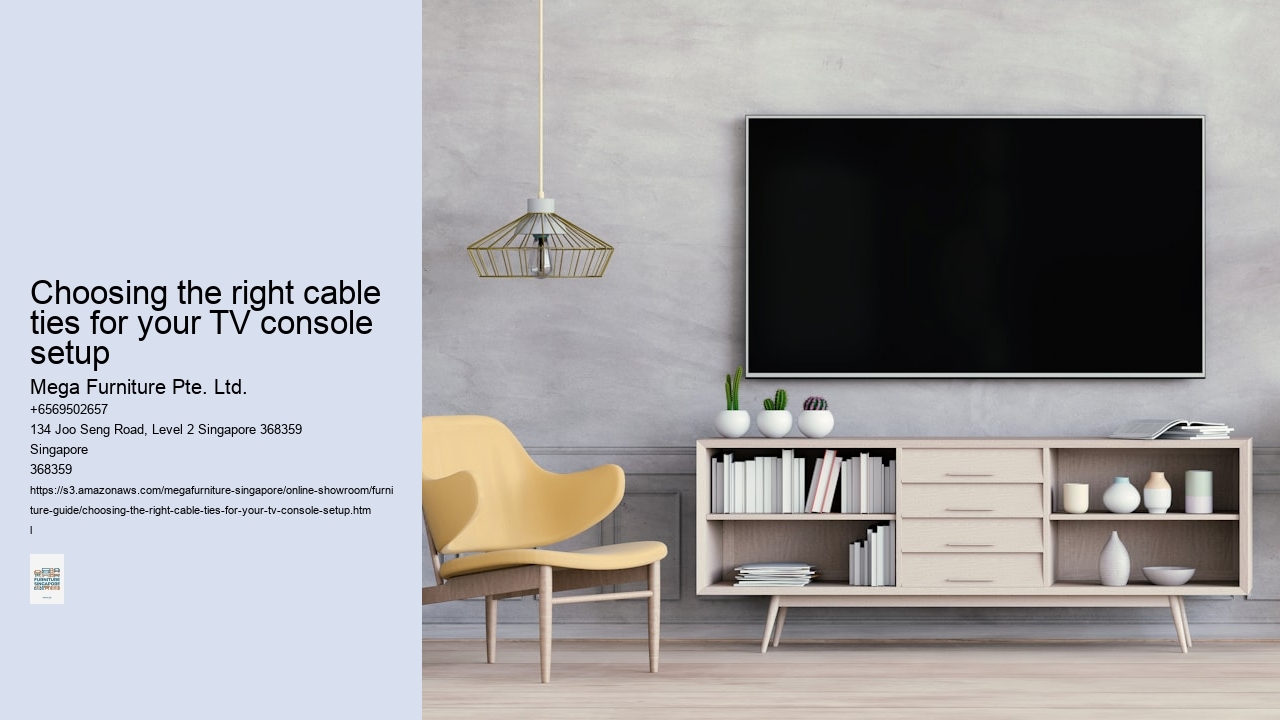
That new console you’re admiring online might look perfect in a Scandinavian showroom photo, but Singapore’s 80% humidity can warp laminate edges and swell particleboard shelves within a year. The material choice isn’t just about aesthetics—it’s a practical defence against the climate. Moisture-resistant MDF, often with a melamine or thermofoil laminate, forms a reliable barrier; solid wood options like rubberwood or acacia, properly sealed, also hold up well, though they’ll carry a higher price tag. You’ll want to avoid standard particleboard or poorly sealed veneers, which can bubble and peel in our damp air, especially in ground-floor units or less ventilated spaces.
For households with pets, the challenge shifts from moisture to claws and cleaning routines. A cat leaping onto a console top can leave deep gouges in a softwood veneer or a thin lacquer finish. Laminated thermofoils, with their plastic-like durability, or toughened glass shelves are far more forgiving—they withstand scratches and allow for daily wipe-downs without clouding or damage. Textured finishes, like a wire-brushed oak or a matte laminate, can also help disguise minor scuffs and paw prints that are inevitable in a busy family living room.
It’s worth considering the entire unit’s construction, not just the visible surfaces. Check that shelf pins and drawer runners are metal, not plastic, as humidity can make plastic brittle over time. A well-sealed back panel, often overlooked, is crucial for preventing moisture ingress from the wall, a common issue in older HDB blocks. For a long, low unit that will sit for a decade, these details matter more than a fleeting trend.
If you’re prioritising resilience, browsing Megafurniture’s TV console collection can show you the range of moisture-resistant and pet-friendly finishes available locally, from sleek laminates to solid wood statements. The key is matching the material to the reality of your home—a console that survives the climate and the chaos is the one you won’t regret buying in three years’ time.
That single power point in your BTO living room wall becomes a spider’s web of adapters and extension cords. Factory-drilled rear grommets are the cleanest solution, allowing you to pass thick power bricks and HDMI cables directly from the wall into the console's cavity. They're typically placed off-centre, which is perfect for feeding cables from a socket located behind your 65-inch TV. You’ll want grommets with removable plastic collars; the rubber ones look tidier but often tear when you’re wrestling a stiff LAN cable through. For a condo media wall, consider a console with dual grommets—one for power, another dedicated to your StarHub fibre optic line.
Built-in cord channels are the unsung heroes for long TV consoles. These are shallow troughs, often lined with felt, that run along the back panel of the unit. They organise cables by device—left channel for the PlayStation, centre for the soundbar power, right for the digital TV box—before everything disappears into a grommet. It’s a simple system that prevents the inevitable tangle behind a 240cm console, especially when you’re dealing with multiple high-speed HDMI 2.1 cables. Without them, you’re just creating a rat’s nest you can’t see but will definitely feel every time you need to swap a component.
A full back panel with a cable management cavity is the difference between a temporary fix and a permanent solution. This isn't just a thin board; it's a structured void, several centimetres deep, that sits between the console's rear legs. All your cables drop into this hidden space, completely out of sight from every angle in the room. It’s essential for floating consoles, where there’s no skirt to hide the mess below, and it keeps dust off your cords. The best versions include vertical straps or clips inside the cavity to keep power strips and excess wire length neatly bundled.
Permanent cable management fails if you can’t reach the power switch on your subwoofer. Smart designs incorporate discreet access panels, either as a removable section of the back board or a small hatch on the side. This lets you plug in a new Google TV dongle or troubleshoot a loose LAN connection without dragging the entire unit away from the wall. In many four-room flats, that console is wedged between a feature wall and a large rug—easy rear access isn’t a luxury, it’s a necessity. A good rule is to check for this feature if your setup uses more than three external devices.
Cable needs evolve faster than your furniture. What seems sufficient for a Singtel TV box and a soundbar today might be overwhelmed by a gaming PC and a NAS drive next year. Look for management systems that aren't prescriptive—channels with removable dividers, cavities deep enough for a bulky eight-port UPS, and grommets sized for future cable standards. That 40mm hole that fits today’s HDMI might not fit tomorrow’s. It’s a dry consideration, but in a landscape where we upgrade electronics every three years, your console should at least last the length of your lease.
The console arrives, and it won’t fit past the staircase landing. It’s a classic Singaporean delivery headache, especially for buyers in older walk-up flats around Eunos or Tampines where the lift opens onto a narrow common corridor. Many forget to measure the lift’s interior dimensions and the final staircase width; a console packaged flat might be 200cm long, but the stairwell turn could only clear 180cm. That’s when you’re stuck with a bulky item on the ground floor, facing extra fees for manual hauling or even a refusal from the delivery crew. It’s not just about the room it’ll live in—it’s about the journey there. Another common misstep is choosing a console shallower than your AV receiver. Most modern receivers, from brands like Sony or Denon, require at least 45cm depth to sit flush; a popular 40cm-deep console might look sleek, but it forces the hardware to overhang. That overhang isn’t just ugly—it can obstruct the infrared signal from your remote, leaving you standing up to change channels. It also exposes the receiver’s rear ports, turning that neat cable management effort into a visible mess of wires poking out the back. The mistake often stems from focusing purely on console length to match a 65-inch TV. Buyers rightly aim for a 180cm to 200cm unit to achieve that proportional look, but they overlook the cabinet’s internal cavity. You need that extra depth not just for the receiver, but for game consoles, media players, and even cable organisers. A console that’s too shallow becomes a display shelf, not a functional hub; everything sits on top, defeating the purpose of concealed storage. Measure twice, then check the product specs. For floor-standing units, confirm the exact assembled height as well—a tall console in a low-ceiling HDB living room can feel oppressive. And remember, depth isn’t uniform; an open-shelf design might offer 45cm, but a console with a full-depth drawer below could sacrifice internal clearance. It’s a detail that separates a seamless setup from a daily annoyance. You can browse a range that accounts for these practicalities at
Megafurniture’s collection, where dimensions are clearly listed.
The online image shows a smooth, uniform surface, but in person the laminate might reveal a subtle grain texture that changes completely under your living room's LED downlights. You can't feel the stiffness of a drawer glide or test the weight capacity of a shelf meant for a Sonos Arc soundbar through a screen. That's the gap between a pixel-perfect product page and the final choice sitting in your 4-room BTO.
Visiting a showroom, like the ones in Joo Seng or Tampines, bridges that gap. You can confirm the exact colour match of a white oak finish against your HDB feature wall—something that varies wildly between monitor calibrations and actual paint. It’s where you press down on a cantilevered section to check for wobble, or slide a finger along a sintered stone top to feel if the seam is truly flush. The decision often hinges on these tangible details, not the specifications.
For a piece as central as a TV console, which needs to organise gaming consoles, media players, and a tangle of cables behind closed doors, material presence matters. A 180cm floating unit might look sleek online, but in the showroom you can assess if its proportions feel overwhelming in a compact living room layout. You'll see how the finish holds up under direct spot lighting, which can make some laminates look cheaper and others richer.
It turns a speculative purchase into a verified one. You leave knowing whether the cable management grommets are large enough for a thick HDMI 2.1 cable, or if the drawers run smoothly even when fully loaded with controllers and remote controls. This final confirmation is why many buyers make the trip before committing; they want to test the furniture as it will be used, not just seen. You can explore the options in person at Megafurniture’s showrooms to settle these questions.
That tactile verification saves the hassle and cost of a return over a finish that looked wrong or a mechanism that felt flimsy. It’s a practical step for a major living room investment.
The third-party courier will leave your 240cm TV console at the lift lobby—they’re not paid to manoeuvre it down the narrow HDB corridor, let alone up a flight of stairs in a landed property. That’s the reality for many buyers, where delivery often stops at the doorstep, leaving you to organise the final, awkward journey and assembly yourself.
For longer consoles, especially those over 180cm designed for 65-inch TVs and up, the challenge is spatial. A typical 4-room BTO corridor might be just 120cm wide; navigating a large, flat-packed box around that final corner is a two-person job. Some retailers maintain their own delivery teams for this exact reason, handling stairway navigation and on-site assembly in terrace houses or walk-up apartments where standard couriers simply refuse.
Once it’s in place, the warranty terms become relevant. In Singapore, structural warranties on furniture typically cover defects in frames and joints for around three years. For a TV console, that means checking the integrity of load-bearing shelves and the stability of the main carcass. If you’re placing a console in a ground-floor unit with direct floor contact, it’s wise to verify any clauses regarding termite-proof treatment or moisture resistance, as these are often exclusions in standard coverage.
The assembly process itself can reveal a lot about build quality. A well-designed console will have pre-drilled holes that align perfectly, with cam locks that don’t strip under moderate torque from the included Allen key. Cheaper, laminated particleboard units might arrive with chipped edges or poorly printed alignment guides, turning a weekend project into a frustrating ordeal.
Consider the finish, too. A high-gloss lacquer or a veneered surface is more susceptible to scratches during assembly than a textured laminate or solid wood. It’s a small detail, but one that matters when you’re sliding heavy components across your newly polished cement floor.
The most revealing questions about TV consoles in Singapore don’t ask about style—they ask about the exact dimensions of a BTO master bedroom wall, the weight of a 65-inch TV, and how to hide the dust that blows in from a West-facing window. These are the real constraints of living here.
Will a 200cm console fit my BTO master bedroom wall? Usually, yes, if the wall is clear. The typical 12 sqm master bedroom in a newer BTO has one clear wall around 3.2 to 3.5 metres wide, but you need to account for swing of the bedroom door and the depth of built-in wardrobes on adjacent walls. Measure twice, buy once.
Best colour to hide dust in a West-facing flat? Go for greys or textured wood finishes. That afternoon sun in neighbourhoods like Clementi or Jurong West highlights every speck on a high-gloss white or a solid black surface; a matte slate grey or an oak veneer with a grain pattern will camouflage the daily accumulation far better.
Can a cabinet hold a 65-inch TV’s weight? It can, but you must check for a reinforced centre panel and proper metal brackets. Many consoles are designed for display, not structure—the TV’s weight, often over 25kg without its stand, can bow particleboard shelves over time. Look for specs mentioning reinforced MDF or solid wood frames, and ensure the mounting hardware is included.
For those piecing together a media wall, the cable management question follows naturally. A clean run of wires isn’t just about tidiness; it’s about safety in a humid climate and accessibility when you need to swap out an HDMI cable. The right console should offer more than just a hole at the back—it should have channels or clips to organise the inevitable spaghetti behind your soundbar and PlayStation.
The best-laid cable management plan often fails because someone forgot to measure the media box’s depth. Start by gathering every device you intend to store—your PS5, the fibre router, that streaming media box, even the bulky power bank. Jot down their dimensions, width and depth being critical; then, with tape measure in hand, confirm the console’s internal cavities can swallow them all, with a few centimetres to spare for ventilation. That slimline power strip you bought? It’s useless if its plug heads are too wide to fit side-by-side in the designated cable management compartment, a common oversight that leaves cords spilling out the back.
For those in resale flats, where renovated floors can slope noticeably, adjustable feet aren’t just a luxury—they’re essential. A console that rocks on an uneven parquet floor is a constant annoyance, and shimming it with makeshift wedges looks terribly unfinished. Verify the model you’ve chosen has proper levelling mechanisms; it’s a small detail that pays off daily in stability and peace of mind.
Once you’re satisfied on paper, a physical verification is non-negotiable. Book a weekday slot at a showroom to avoid the weekend crowds at Megafurniture’s Tampines or Joo Seng locations; you’ll want the space to crouch down, open the doors, and visualise your own gear inside. Bring your measurements list and test the ease of accessing the rear cable ports—if you can’t reach them comfortably in the showroom, you certainly won’t at home behind your 65-inch TV.
This final audit feels tedious, but it’s what separates a seamless installation from a frustrating compromise. You’re not just buying a piece of furniture; you’re engineering the centre of your living room’s entertainment, and that demands a methodical, last-minute check.
Walkway clearance dictates console length in Singapore's living rooms - a 180cm unit placed centrally in a typical 24 sqm HDB space leaves roughly 70cm on either side for traffic, a figure that feels generous until you account for the sofa's footprint. A TV console anchors the wall opposite the sofa in the same way a tall bookshelf anchors a corner — long horizontal piece, mix of open and closed storage, defines the visual weight of one whole side of the room. Megafurniture's TV Console range covers floating wall-mounted designs, low-profile freestanding consoles, and modular feature-wall configurations. Most pieces sit at 40-50cm height, sized for screens up to 75 inches.. That's the arithmetic most BTO and resale flat owners confront: the console isn't just a furniture piece, it's a traffic management device. Families upgrading to a 65-inch TV might crave a 240cm console for proportion, but in many four-room layouts, that would force a single-file shuffle past the media wall.
Condo layouts often afford more latitude. A 240cm piece can anchor a feature wall in a 35 sqm living-dining area, where the open plan and wider corridors allow a console to dominate visually without obstructing flow. It's a different calculus altogether - the piece becomes a focal point, not just a functional base. The material choice shifts too; in tighter HDB spaces, a lighter finish like oak or a low-profile floating design reduces visual bulk, while condos might opt for a statement material like sintered stone or a dark walnut veneer.
Budget follows the dimensions. A 120cm console for a compact setup might sit around $400 to $800, while a 240cm feature unit in a condo could range from $1,200 to $2,400, reflecting not just size but often higher-end finishes and integrated tech solutions. A Bookshelf earns its place in Singapore homes through dual function — book and decor storage in the open shelves, soft visual division when placed mid-room in open-plan condominium layouts. Megafurniture's combined display unit and bookshelf hub covers tall book racks, cubby-hole designs, ladder shelves, modular cube systems, and glass-door pieces in oak, walnut, and MDF veneer finishes. Solid-wood pieces typically start around $425, with most heights spanning 120cm to 220cm to fit standard 2.6m HDB ceilings.. That's where storage considerations split as well - HDB buyers typically prioritise concealed cabinets for clutter control, while condo selections might balance closed storage with open shelving for display.
Ultimately, measuring your room's clear walkable width after sofa placement is the only reliable method. A console that spans the entire wall between two doorways creates a seamless look, but it'll pinch circulation if those doorways are used daily. The better approach is to centre the console on the TV wall, leaving equal breathing room on each side - and in many HDB flats, that practical limit lands around 180cm to 200cm, regardless of how large your screen dreams are.
Walkway clearance dictates console length in Singapore’s living rooms — a 180cm unit placed centrally in a typical 24 sqm HDB space leaves roughly 70cm on either side for traffic, a figure that feels generous until you account for the sofa’s footprint. That’s the arithmetic most BTO and resale flat owners confront: the console isn’t just a furniture piece, it’s a traffic management device. Families upgrading to a 65-inch TV might crave a 240cm console for proportion, but in many four-room layouts, that would force a single-file shuffle past the media wall.
Condo layouts often afford more latitude. A 240cm piece can anchor a feature wall in a 35 sqm living-dining area, where the open plan and wider corridors allow a console to dominate visually without obstructing flow. It’s a different calculus altogether — the piece becomes a focal point, not just a functional base. The material choice shifts too; in tighter HDB spaces, a lighter finish like oak or a low-profile floating design reduces visual bulk, while condos might opt for a statement material like sintered stone or a dark walnut veneer.
Budget follows the dimensions. A 120cm console for a compact setup might sit around $400 to $800, while a 240cm feature unit in a condo could range from $1,200 to $2,400, reflecting not just size but often higher-end finishes and integrated tech solutions. That’s where storage considerations split as well — HDB buyers typically prioritise concealed cabinets for clutter control, while condo selections might balance closed storage with open shelving for display.
Ultimately, measuring your room’s clear walkable width after sofa placement is the only reliable method. A console that spans the entire wall between two doorways creates a seamless look, but it’ll pinch circulation if those doorways are used daily. The better approach is to centre the console on the TV wall, leaving equal breathing room on each side — and in many HDB flats, that practical limit lands around 180cm to 200cm, regardless of how large your screen dreams are.